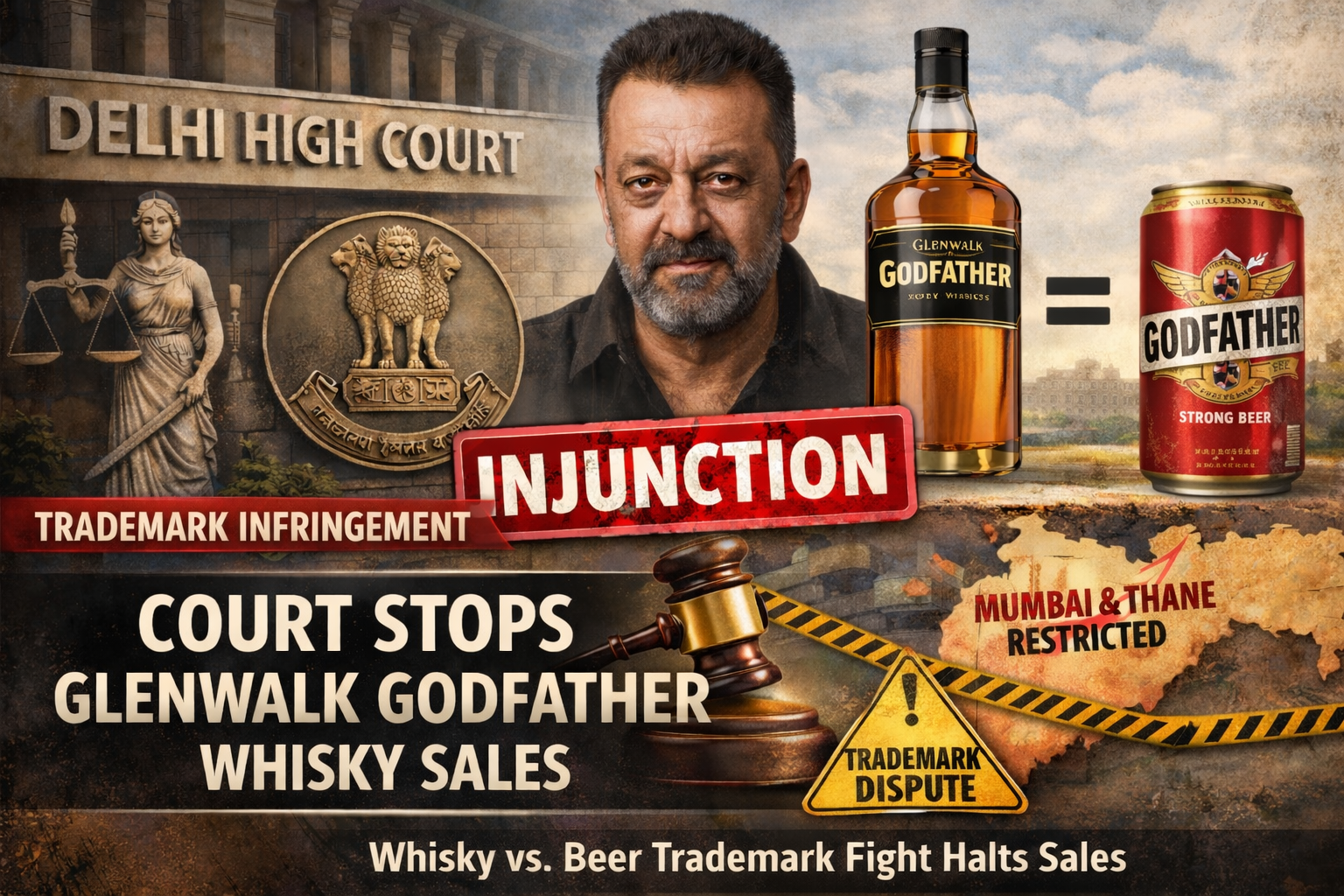
Sanjay Dutt’s latest venture into the spirits market has hit a legal roadblock before its full release. The Delhi High Court recently issued an interim injunction against the brand known as ‘The Glenwalk Godfather Whisky.’ This decision comes after a trademark challenge from an established player in the Indian brewing industry.
The legal action centers on the use of the name 'Godfather,' a term already deeply associated with a popular beer brand. Cartel Bros Private Limited, the firm behind the new whisky, now faces restrictions on how they can promote and sell their product. This case finds that even celebrity-backed ventures must follow strict trademark rules to avoid consumer confusion.
The dispute shows the legal tension that arises when new brands enter a market using names that resemble established trademarks. The court's intervention ensures that the status quo remains while the legal merits of the case are debated. This move protects the commercial interests of the original trademark owner during the litigation process.
Delhi High Court stops Glenwalk Godfather launch
The Delhi High Court issued an interim injunction on April 7, 2026, halting the commercial launch and promotion of ‘The Glenwalk Godfather Whisky.’ This order prevents Cartel Bros Private Limited from releasing new social media posts or marketing materials. The court's action aims to prevent consumer confusion while the trademark dispute remains active.
Justice Tushar Rao Gadela presided over the single-judge bench that delivered the order. The court stated, “Defendant no.1 shall not release any new posts in respect of the afore-noted product on social media platforms till the next date of hearing,” during the April 7, 2026, session. This specific restriction targets the digital marketing strategy of the Sanjay Dutt-backed brand.
The order does not just stop digital ads but also impacts the physical presence of the brand. Cartel Bros agreed to defer the commercial launch of the product until the court hears the matter again. The interim injunction issued on April 7, 2026, effectively pauses all primary promotional activities for the Glenwalk Godfather brand.
By stopping new posts, the court limits the brand's ability to build a following before the legal ownership of the name is settled. This prevents the defendant from gaining further market traction under a disputed identity. The ruling makes it clear that digital footprints are as strictly regulated as physical product labels in trademark cases.
Devans Modern Breweries protects 1984 trademark
Devans Modern Breweries Limited has marketed its 'Godfather' beer brand since 1984, establishing significant goodwill in the Indian alcohol market over four decades. The company argues that the 'Godfather' name is a registered trademark central to its brand identity. This long-standing market presence forms the basis of their claim against newer competitors.
The plaintiff, Devans Modern Breweries, claims that they have used the 'Godfather' mark for their flagship beer for over 40 years. This history has led to the brand becoming a household name in many parts of India. They allege that the adoption of the name by Cartel Bros is a dishonest attempt to benefit from this long-standing reputation.
Devans argues that the use of 'Godfather' for a whisky product is too similar to their beer brand. Since 1984, Devans Modern Breweries has built significant brand equity that they claim is now at risk of dilution. The company filed the suit to prevent what they describe as the unauthorized use of their intellectual property.
In the world of alcoholic beverages, brand names often carry the weight of consumer trust built over generations. Devans points to their 1984 start date to show that they are the senior user of the mark in this sector. They believe that allowing a new whisky to use the same name would unfairly capitalize on their decades of marketing spend.
Legal claims of trademark infringement and passing off
The suit filed by Devans Modern Breweries includes allegations of trademark infringement and passing off under the Trade Marks Act. These legal claims suggest that the use of 'Godfather' by Cartel Bros could mislead consumers into believing the whisky is associated with the established beer brand. The court is examining these similarities closely.
Infringement occurs when a party uses a mark that is identical or confusingly similar to a registered trademark for similar goods. Devans argues that both beer and whisky fall under the same broader category of alcoholic beverages. This proximity in the market increases the chance that a buyer might think both products come from the same source.
The concept of passing off involves one party attempting to misrepresent their goods as those of another. Devans alleges that by using the 'Godfather' name, Cartel Bros is trying to pass off their whisky as part of the established Devans family. The Trade Marks Act serves as the primary legal tool used by Devans to seek relief against these alleged violations.
The court will look at whether the average consumer would be confused when seeing both products on a shelf or in an advertisement. If the names are identical, the law often favors the party that registered the mark first. In this instance, the 1984 registration date for the beer brand is a heavy factor in the legal calculation.
Restricting sales in Mumbai and Thane markets
Beyond digital promotion, the court's interim injunction affects physical sales through instructed retailers in Mumbai and Thane. Cartel Bros agreed to defer the commercial launch of their whisky product under the disputed mark. This restriction ensures that the product does not enter the market while legal proceedings are ongoing.
The court's reach extends to the specific regions where the product was most active. Retailers in Mumbai and Thane received instructions to hold back on sales of the whisky under the impugned mark. This physical restriction works alongside the social media ban to create a total freeze on the brand's commercial entry.
A point of clarification in the order mentioned that the defendants are not liable for existing public domain ads they did not create. For example, if a third-party fan page or an independent news site posted an image of the bottle, Cartel Bros is not in contempt of court. The court order focuses on preventing new commercial activity in key markets like Mumbai and Thane.
This regional focus shows how trademark disputes can immediately halt supply chains. Even if the product is bottled and ready, the legal stay prevents it from reaching the consumer. This pause protects the market from becoming saturated with a brand that might eventually be forced to change its name.
Next steps in the April 10 2026 hearing
The Delhi High Court has scheduled the next hearing for this trademark dispute on April 10, 2026. This session will likely address the responses from Cartel Bros and determine the future of the interim injunction. Procedural filings with the Joint Registrar are also planned to continue through July of the same year.
The April 10 hearing will allow Cartel Bros to present their defense against the allegations of dishonest adoption. They will need to show why their use of the name does not infringe on the 1984 trademark. Until that date, the interim injunction remains the rule of the land for the whisky brand.
Following the April hearing, the case will move into more detailed procedural steps. The court mentioned that filings with the Joint Registrar are scheduled for July. The next hearing on April 10, 2026, will be a deciding factor for the immediate future of the Glenwalk Godfather brand.
These procedural dates show that intellectual property battles are rarely won or lost in a single day. The case will require a deep look at evidence regarding brand reputation and consumer surveys. For now, the Sanjay Dutt-backed whisky remains on the sidelines as the legal process moves forward.
Legal references explained
Trade Marks Act: This is the primary legislation in India that governs the registration, protection, and use of trademarks. It provides the legal basis for owners to sue for infringement and seek injunctions against unauthorized use.
Trademark infringement: This occurs when an unauthorized person uses a mark that is identical or deceptively similar to a registered trademark. The law protects the registered owner from such use to prevent confusion among consumers about the origin of goods.
Passing off: This is a common law remedy used to protect the goodwill and reputation of a business. It prevents one person from misrepresenting their goods or services as being those of another, even if the original mark is not registered.
Interim injunction: A temporary court order that stays in place until a final judgment is made or until a further order is issued. It is used to maintain the current situation and prevent irreparable harm to one party during the trial.